
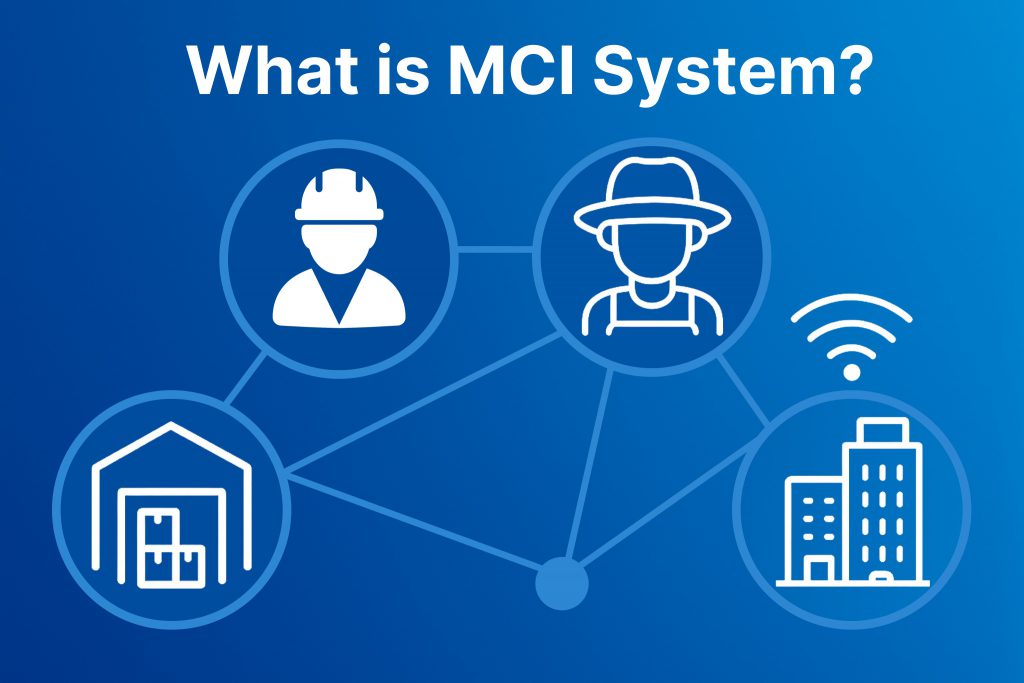
In the digital era, where businesses demand speed, accuracy, and real-time traceability, selecting an intelligent business management platform that seamlessly integrates all data across operations has become a key competitive advantage. CABMA-MCI is a comprehensive business and supply chain management platform designed to meet the needs of modern organizations, covering warehouse management, sales, logistics, and advanced data analytics.
What Is CABMA-MCI?
CABMA-MCI is the definitive Business-Seamless Operations Assistance Platform, designed to bridge the gap between real-world operations and digital systems.
The platform seamlessly connects People, Locations, and Operational Assets with core Products & Services, forming a unified operational ecosystem where day-to-day operations run smoothly, consistently, and without disruption.
Acting as the Central Source of Operational Status, CABMA-MCI operates on a robust IoT Gateway as a Service architecture. It captures and organizes data from real-world assets—such as machines, vehicles, infrastructure, and storage systems—and transforms them into structured operational visibility.
By serving as an assistance layer rather than a control system, CABMA-MCI supports coordination, clarity, and continuity across distributed operations. This ensures that operational activities remain synchronized, traceable, and directly aligned with measurable business outcomes.
Key Components of the CABMA-MCI System
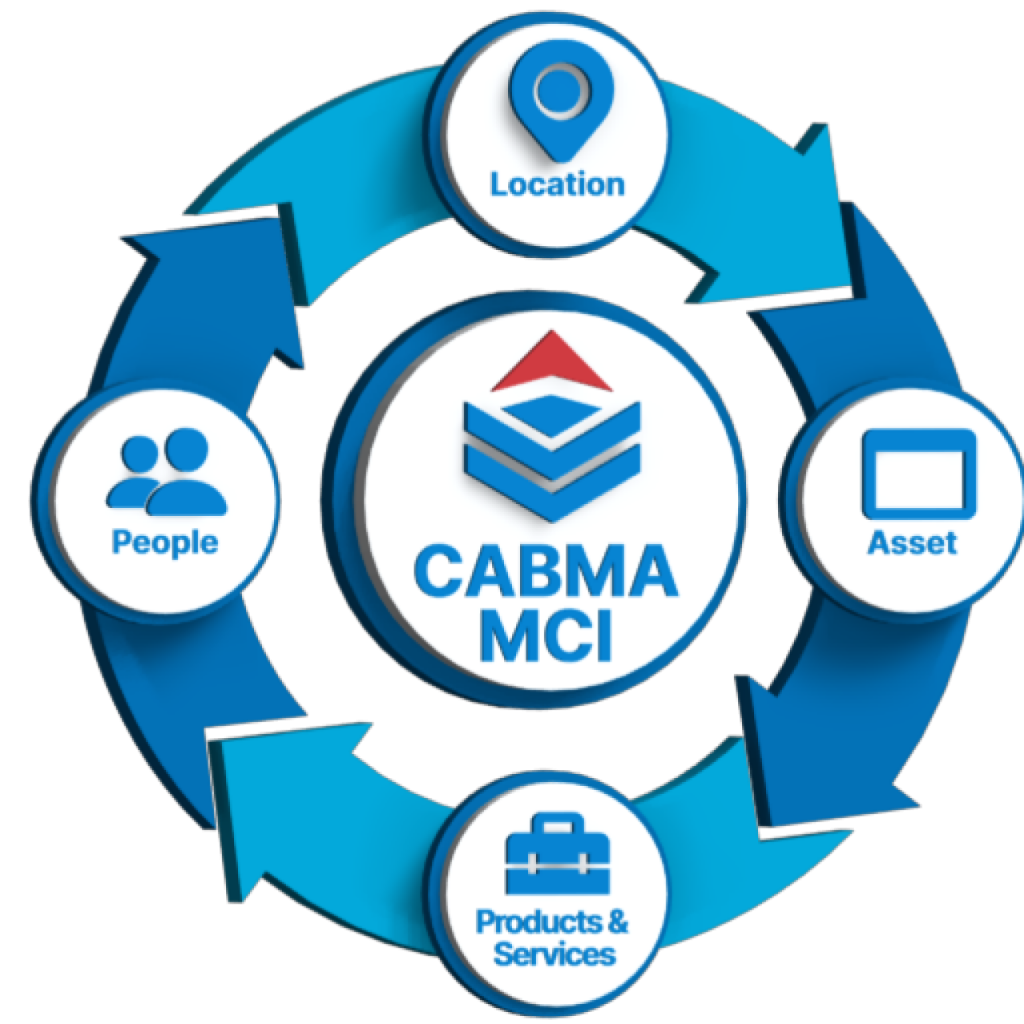
The CABMA-MCI system is comprised of three core components:
1. Location Tracking
This component focuses on identifying the real-time location of items or equipment within a storage facility. The CABMA-MCI system uses a structured warehouse layout that includes three hierarchical levels:
- Zone: The main area or section (e.g., Zone A, Zone B)
- Loc (Shelf): Specific shelves or sub-locations within each zone (e.g., A.Loc 1, A.Loc 2)
- Bin: Smaller compartments within each shelf for precise item placement
2. People Management (User Management System)
CABMA-MCI supports assigning access rights based on user position and role, allowing for detailed control over data access and system functionality according to responsibilities.
3. Asset Management
This involves tracking and managing various assets and equipment used within the system, such as:
- Sensors and monitoring devices
- Tools installed within the storage area
- Groups of devices (sensor groups)
Key Features of the CABMA-MCI Platform
- Centralized Business Management (Single Source of Truth)
CABMA-MCI serves as a centralized data hub, integrating information from POS, WMS, TMS, and IoT platforms. This reduces data inconsistencies and improves operational accuracy. - Real-Time Warehouse and Inventory Management
The platform supports WMS and IoT-enabled devices to provide real-time inventory updates, helping prevent stock shortages or overstock situations while improving warehouse efficiency. - Sales and Order Management Integration
CABMA-MCI connects the entire sales workflow—from order placement and stock verification to delivery—enabling faster and more accurate customer service. - Logistics and Transportation Management (TMS Integration)
By integrating with TMS, the platform enables efficient transportation planning, execution, and tracking, reducing logistics costs and improving delivery visibility. - Enhanced Transparency and Fraud Risk Reduction
The system validates data consistency between sales and warehouse operations and provides alerts when anomalies are detected, reducing errors and internal fraud risks. - Data Analytics and Decision Support
Real-time dashboards and analytical reports provide management with clear business visibility and support data-driven strategic decision-making.
Key Modules of CABMA-MCI
1. System Corebase
The foundational architecture and core engine of the software, responsible for platform performance, security, and scalability. It ensures system stability, flexibility, and business-driven expansion.
2. User Management System
Manages internal and external users with structured control over roles and access rights, supporting both back-office and front-office operations.

3. IoT Asset Management System
Manages IoT devices and assets such as machinery, electrical equipment, and on-site facilities, integrating sensor data with role-based access control and installation location mapping.

4. Item Master & Movement
Handles product master data and inventory movements, integrating with ERP, Sales Order, and WMS to optimize warehouse operations and related processes.

5. Sales Order Stream
A complete end-to-end sales order workflow—from order intake and processing to delivery and billing—supporting both multi-channel and omni-channel sales models.
6. WMS Distribution & TMS
Manages warehouse operations, distribution, and transportation planning in alignment with sales orders to increase speed and reduce logistics costs.

7. Supply Chain Management
An end-to-end supply chain management system covering planning, sourcing, production, and delivery, enhancing efficiency and agility across the entire supply chain.
Applications of the CABMA-MCI System
The CABMA-MCI system can be applied across various industries—particularly in environments that require secure, precise, and traceable asset management. Key use cases include:
1. Smart Farming
In agricultural contexts, CABMA-MCI can help manage farms more efficiently by:
- Controlling irrigation, fertilizers, or chemicals via connected IoT assets
- Locating seed, fertilizer, and product storage using warehouse-style mapping
2. Smart Warehouse
CABMA-MCI is purpose-built for intelligent warehouse management, enabling:
- Detailed location tracking of inventory (Zone / Shelf / Bin)
- Monitoring employee actions based on their access rights to prevent unauthorized handling
- Tracking transportation equipment within the warehouse
- Real-time tracking of goods and devices as they move
3. Smart Building
For buildings with complex internal systems, CABMA-MCI enables:
- Monitoring and managing electrical equipment, lighting, and HVAC through grouped assets
- Systematic storage of maintenance tools and spare parts in a centralized facility
- Monitoring various sensors such as fire alarms and CCTV systems
Conclusion
The CABMA-MCI system is a powerful tool for improving warehouse and asset management within organizations. With a flexible, well-structured design, CABMA-MCI can be adapted to various sectors including smart farming, smart warehousing, and smart buildings. It enhances accuracy, reduces errors, and supports intelligent operations at every level of the organization.